
Moral memory as an expression of love
Thoughts on how meditation can deepen our engagement with the natural world

What does Christian Hermeticism have to do with ecology? Both topics are immense, and to be honest, I’m a bit intimidated by the prospect of explaining something as intricate and subtle as the spiritual exercises described in Valentin Tomberg’s magisterial Meditations on the Tarot: A Journey into Christian Hermeticism.
Christian Hermeticism is a school of meditation-based spiritual exercises rooted in Western contemplative traditions, and drawing upon Christian and Jewish esotericism, Greco-Egyptian Hermeticism, and Platonism. Tomberg describes his conception of Christian Hermeticism this way:
“It is inspiration in common which underlies the mental and symbolic language common to Hermeticists – the language of analogy, the marriage of opposites, synthesis, moral logic, the dimension of depth added to those of clarity and breadth of knowledge, and above all the ardent belief that all is knowable and revealable, that the mystery is infinite knowability and revealability.” 1
In other words, Christian Hermeticism is a path of continual learning and engagement, motivated by the conviction that the world is full of revelation and the capacity to be loved, healed, and transformed.
The reconciliation of opposites is key to the Christian Hermetic path, and this is a major source of its appeal to me. All of my life I’ve had to grapple with duality and contradiction, whether actual or perceived. These include tensions based on racial, gender, class, and place-based identities, as well as the conflict between individual development and collective well-being, human prosperity and environmental responsibility. Over the past few years, I’ve been learning how to weigh competing social, economic, and environmental interests and address deep-rooted cultural problems holistically. The graduate degree in sustainability that I am pursuing is preparing me to reconcile opposites from a scientific and empirical standpoint. The spiritual exercises of Christian Hermeticism are helping me do so from a contemplative and religious standpoint.
Now, in the past I often associated meditation primarily with spiritual ascension and transcendence2, but contemplative disciplines have various aims. One of them is deepening one’s understanding of and engagement with the natural world. Let’s revisit Tomberg’s “Our Mother” prayer, which I introduced in my introductory reflection. This prayer mirrors the traditional Christian prayer to the Heavenly Father in that it has seven petitions to the Earthly Mother. Here’s the prayer again:
Our Mother,
Thou who art in the heart of the earthly realm,
May the holiness of Thy name shine anew in our remembering.
May the breath of Thy awakening kingdom warm the hearts of all who wander homeless.
May the resurrection of Thy will renew eternal faith, even unto the depths of physical substance.
Receive this day the living memory of Thee from human hearts,
Who implore Thee to forgive the sin of forgetting Thee,
And are ready to fight against temptation, which has led to Thy existence in darkness.
That through the deed of the Son, the immeasurable pain of the Father be stilled,
By the liberation of all beings from the tragedy of Thy withdrawal.
For Thine is the homeland, and the boundless wisdom, and the all-merciful grace,
For all and everything in the circle of all.
Amen.
Not only can one’s understanding of the petitions be deepened through meditation, but embedded within the overall structure of the prayer are the stages of awakening brought about by meditation. For example, in meditating on the petition, “Receive this day the living memory of Thee from human hearts,” I recalled what Tomberg wrote about the different types of memory that can guide our actions: associative or mechanical memory, logical memory, and moral memory. Our consciousness can be ruled by the free play of association, guided by structured thinking, or motivated by conscience. All three forms of memory are necessary, but moral memory is the least superficial and most mature, according to Tomberg:
“All the things that we love are not forgotten. It is the state of memory through love. And the more threads of warmth of the heart stretching in all directions of existence to beings and things in the world, the more comprehensive, clear, and profound is moral memory.” 3
Thus, the extent of my relationship with the Cape Fear River watershed that I live within can be gauged by asking the following questions:
What comes to mind when I hear the phrase “Cape Fear River”? (associative memory)
What do I know about the sources of pollution in the Cape Fear River? (logical memory)
What am I doing to address pollution of the river? How have I made the river part of my circle of concern? (moral memory)

A local wetland that I recently volunteered to help remove litter from. (Photos are mine.)
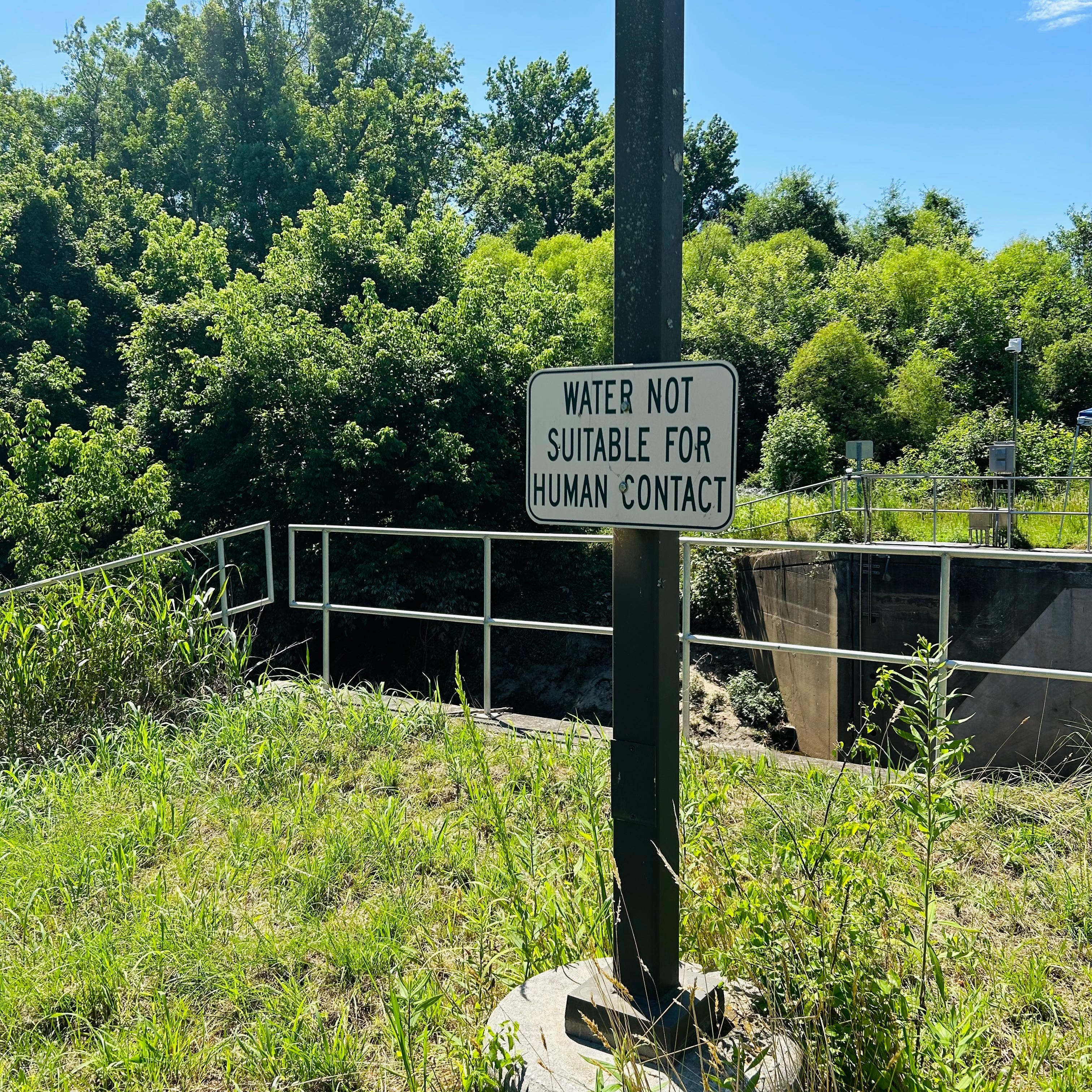
What happens when we forget our connection to the natural world.
Addressing pollution in the river is a matter of conscience and heart, not limited to a sentimental feeling we typically associate with the word love. To remember the Earthly Mother is to remember and nurture the web of life that makes human biological life possible. And meditation is an important means of recalling encounters with the sacred and intensifying moral life.
A numinous experience with a “meadow across the creek” during childhood served as a seed and stimulus that guided Thomas Berry’s life work. The biography of the cultural historian and Catholic priest states that he was “transfixed by the wonder and beauty” of a spring meadow near where his family home was being built, and that the experience “deepened his profound sensitivity to nature, a disposition that became increasingly normative for him over his lifetime.” 4 The biography goes on to state that Berry’s reflections on his early experiences in nature helped him navigate the interplay between nature’s creative and destructive dynamics and the tensions between the domestic and the wild in nature and the rational and emotional sides of humans. Berry’s vocation was characterized by a need to reconcile opposites, one shared by Christian Hermeticists, whether they identify as such or not.
Several years ago, I wrote a poem that I look upon now as expressing that desire for reconciliation between heaven and earth, the wild and domestic. This desire is a thread woven throughout my life, holding me together as I navigate the political, cultural, and environmental challenges of the 21st century.
The search for home
Is not a delusion.
It’s a cosmic yearning to
Be seen, touched, and
Coaxed from mysterious voids.
It’s OK to be troubled
And ask ancient questions,
To reconsider one’s righteousness,
And humbly court mythic powers
Outside our havens of forgetfulness.
Maybe you discover home is
Seeing the world anew,
Traveling the universe in a city block,
And witnessing the primeval fireball
In each blooming rose or swooping hawk.
Perhaps you finally abide the flesh
And attend the orbit of pollen,
Mosquitos, and peculiar neighbors,
Granting their otherness
A place in your journey.
So that when you arrive,
It’s to the wonder of whirling
Dandelion seeds, swaying pine trees,
The generosity of soil and stone, and
The vastness of your own heart.
Page 397 of Meditations on the Tarot, 2002 Tarcher/Penguin edition.
My understanding of the often misunderstood concept of transcendence has evolved; I may write more about this later.
Lazarus Come Forth, Meditations of a Christian Esotericist on the Mysteries of the Raising of Lazarus, the Ten Commandments, the Three Kingdoms, and the Breath of Life, published 2006 by Lindisfarne Books,, p. 53.
From Thomas Berry: A Biography by Mary Evelyn Tucker, John Grimm, and Andrew Angyal, published 2019 by Columbia University Press, page 17.